South Korea proposes lifting ICO ban and regulating stablecoins
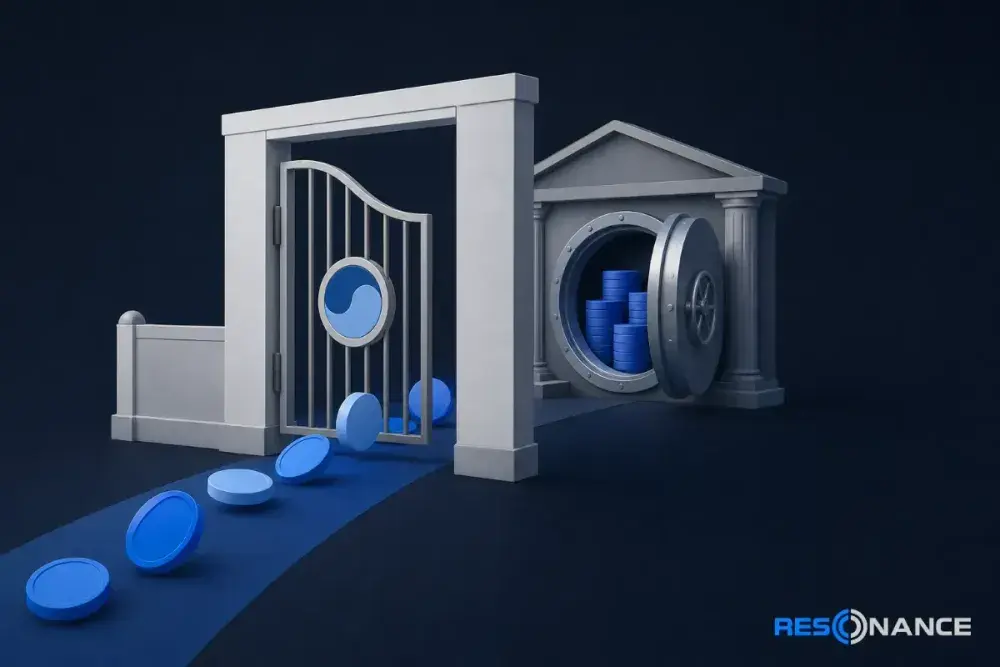
South Korea’s crypto bill would reopen domestic ICOs, give banks collective control of the first won stablecoin issuers and set a standard 20% cap on major exchange shareholders.
Table of contents
South Korea’s Financial Services Commission (FSC) presented a bill on November 24 that would bring back initial coin offerings (ICOs) after a nine-year ban, set conditions for issuing won-backed stablecoins and cap the stakes of major crypto exchange shareholders.
A route back to domestic token sales
South Korea has barred domestic ICOs since 2017, leaving local blockchain teams to run offerings through overseas entities. Under the bill, issuers could sell tokens domestically after filing a white paper with the FSC and making it public. The document would have to disclose how many tokens the project plans to issue, how it intends to spend the proceeds and what risks buyers face.
Banks would lead won stablecoin issuance
The first eligible issuers would be consortiums in which banks collectively own more than 50%. A technology company could still be the largest single shareholder. Applicants would need at least 5 billion won in equity capital, qualified staff and adequate infrastructure. Their issuance, reserve management and redemption plans would need FSC approval.
Issuers would have to hold reserves covering at least 100% of outstanding tokens, honor redemptions without delay and refrain from paying interest to holders. At 1 trillion won in outstanding issuance, the Bank of Korea could request joint inspections of the issuer.
Exchange ownership and customer losses
Major exchange shareholders would face a standard cap of 20%, with stakes of up to 34% allowed by regulatory approval. Shares above the applicable cap would lose voting rights. Exchanges would have three years to comply after designation as digital asset platform operators. Smaller venues that need more time to raise capital could qualify for another three years.
Dunamu, which operates Upbit and is pursuing a merger with Naver Financial, could have to restructure its ownership. Major shareholders in Bithumb and Digital X already hold stakes above the proposed 34% ceiling.
Trading, brokerage, custody and investment management would face separate licensing and registration requirements. Crypto firms would also be liable for customer losses from hacks and system failures even when users cannot prove negligence.
Analysis for traders
- Strengths. Full reserves and prompt redemption could make won stablecoins more practical for settlement: holders would not have to rely on finding an exchange buyer to redeem them.
- Weaknesses. The bank-majority rule and the 5 billion won capital floor could narrow the first wave of issuers. Fintech firms looking to issue at launch would need bank partners.
- Opportunities. Reopening domestic ICOs could give Korean blockchain teams a local funding route and let traders compare planned token supply and use of proceeds before offerings open.
- Threats. If Bithumb and Digital X have to restructure, traders should watch whether the transition affects order execution. The bid-ask spread is one way to compare trading conditions across venues.
What to watch next
- Whether the bill reaches the National Assembly by November 25, as expected, and whether its ICO provisions and exchange ownership caps survive deliberations.
- Which bank-led consortiums submit the first stablecoin plans if the bill passes, and how they arrange redemptions.
- Whether the final ownership caps require changes at Upbit, Bithumb and Digital X.
Source: crypto.news
No need to invent complex schemes or hunt for the “grail”. Use the tools of the Resonance platform.
Sign up on exchanges via our links and get bonuses:
OKX | BingX | KuCoin.
Prop firm — trade with the company’s capital: Kraken.
Promo code TOPBLOG gives you 10% off any Resonance plan.
Recommended articles