Injective asks SEC to allow tokenized stock order books
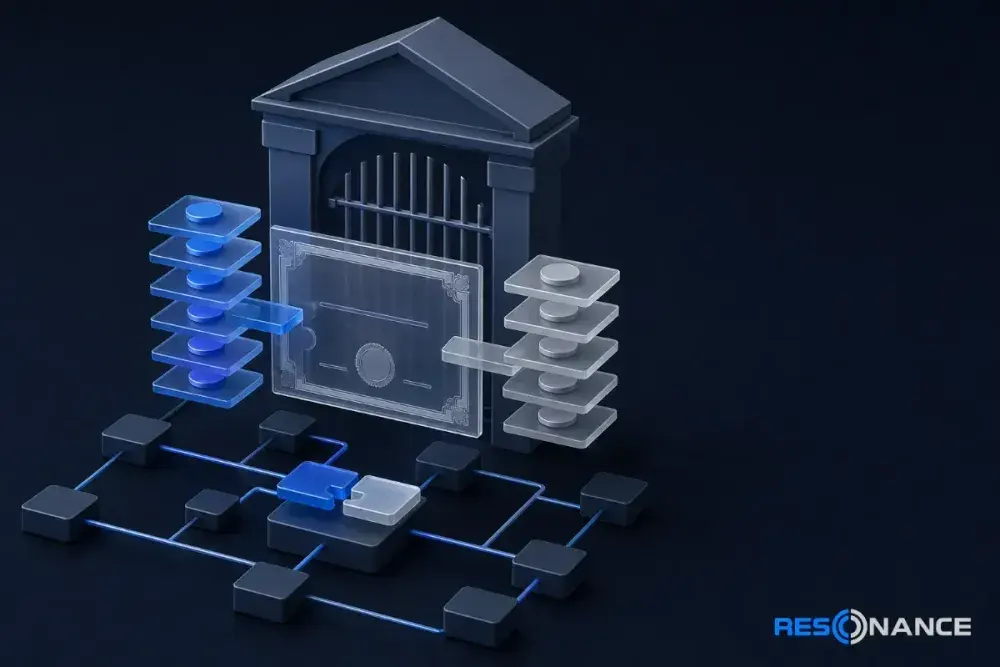
Injective Labs wants permissioned order books included in the SEC’s five-year exemption. Nasdaq warns of fragmented liquidity, while Securitize calls for monitoring persistent price gaps.
Table of contents










Injective Labs filed a letter on Nov. 23 asking the SEC (U.S. Securities and Exchange Commission) to let onchain order books with restricted access trade tokenized U.S. stocks. The 22-page letter became public on Nov. 26. The temporary exemption currently gives qualifying venues that use automated market makers five years of conditional relief from the statutory definition of an exchange.
How Injective would broaden the exemption
An automated market maker (AMM) sets prices and executes trades against assets in a pool. An order book instead matches bids and offers from traders. Injective wants the same eligibility rules for order books run by smart contracts on a public blockchain and those built into the chain itself. Trading volume caps and access restrictions would stay in place, as would the terms of the separate dealer exemption for liquidity providers in AMM pools.
Injective says approved traders could keep custody of their assets, trade around the clock and settle within seconds. The SEC could compare bid-ask spreads, order depth and fill rates with data from conventional exchanges.
Price bands and trading halts
During regular market hours, venues would reject or reprice orders that would execute outside the underlying stock’s price bands. If the price-band feed went down, venues would reject orders that would otherwise execute until the feed returned. Outside regular hours, each venue would disclose and apply its own volatility controls.
Operators would monitor for manipulation and block matches between orders identified as coming from the same participant or accounts under common control. Before opening, a venue would have to show that a designated person can halt and restart trading. A halt would cover every way of submitting an order, including third-party interfaces and direct protocol connections.
Where Nasdaq and Securitize stand
Nasdaq warned that separate tokenized venues could fragment liquidity and make consolidated prices harder to see. It urged the SEC to bring tokenization into the U.S. National Market System through formal rulemaking and let issuers opt in. Securitize backed the temporary exemption and called for monitoring persistent gaps between token prices and underlying share prices.
Analysis for traders
- Strengths. Comparing bid-ask spreads, depth and fill rates with conventional exchanges could show how well order books under Injective’s proposal execute trades, not just what prices they display.
- Weaknesses. If the price-band feed fails during regular hours, a trader could lose access to immediate execution even when there is a matching order in the book.
- Opportunities. A round-the-clock order book could let traders act outside the regular stock market session, though volatility controls would vary by venue.
- Threats. If liquidity splits across venues as Nasdaq warns, a quote on one venue may tell traders less about the price they can get for the size they want to trade.


What to watch next
- The SEC advisory committee’s public panel on Dec. 3 at 10 a.m. ET: whether it considers including order books in the exemption and on what terms.
- If order books qualify, compare their spreads, depth and fill rates with those of conventional exchanges and check whether gaps with underlying share prices persist.
Source: crypto.news
No need to invent complex schemes or hunt for the “grail”. Use the tools of the Resonance platform.
Sign up on exchanges via our links and get bonuses:
OKX | BingX | KuCoin.
Prop firm — trade with the company’s capital: Kraken.
Promo code TOPBLOG gives you 10% off any Resonance plan.
Recommended articles