Court dismisses Coinbase lawsuit over TerraUSD collapse
A court dismissed a class action against Coinbase over the UST collapse. The exchange disclosed the stablecoin’s reliance on LUNA, and the plaintiff did not establish a link between Coinbase’s conduct and the crash.
Table of contents


A federal court in the Northern District of California dismissed a class action against Coinbase over the May 2022 collapse of the algorithmic stablecoin TerraUSD (UST). Judge Maxine Chesney dismissed all seven claims without allowing the plaintiff to amend the complaint again.
What Coinbase disclosed about TerraUSD
Larry Pearl said he bought UST through Coinbase shortly before the collapse, expecting the token to hold its value near $1. His original complaint said he held about $13,000 in UST on the exchange when it crashed and went on to lose more than 90% of his investment.
Pearl argued that Coinbase had not adequately explained UST’s reliance on LUNA. The court found that Coinbase said UST was not backed by dollars in a bank account, explained that minting one UST required burning $1 worth of LUNA, and linked to Terra’s technical documentation. The court also noted that the U.S. Securities and Exchange Commission (SEC) had publicly disclosed its Mirror Protocol investigation in November 2021, before Pearl bought UST.
Why the court dismissed the claims
Applying the Howey test for investment contracts, the court found that Pearl had not alleged enough facts to show that UST investors were part of a common enterprise. By his own account, he expected UST to hold its value, not generate a profit. The court pointed to the distinction between buying UST as a stable asset and using it in Anchor to earn yield. Pearl also did not establish that he bought the tokens directly from Coinbase rather than from another seller through the exchange.
Pearl himself attributed the crash to a large withdrawal from the Terra ecosystem, widespread UST selling, and the subsequent failure of the peg mechanism. The court found that the complaint did not explain how Coinbase’s alleged violations caused UST to fall. That was one reason it dismissed the market manipulation claims.
Analysis for traders
- Strengths. For Coinbase, the ruling means the plaintiff cannot rework the same complaint again in this case. That narrows the legal exposure traders need to assess here, but says nothing about other disputes.
- Weaknesses. Disclosing UST’s reliance on LUNA did not make the peg more resilient. Pearl’s reported loss of more than 90% is a reminder not to treat an algorithmic stablecoin as equivalent to dollars in a bank account when managing risk.
- Opportunities. The distinction between buying UST and using it in Anchor gives traders a way to compare products: assess the terms for earning yield separately from the mechanism that is supposed to hold the peg.
- Threats. In Pearl’s account, a large withdrawal and a wave of UST selling preceded the peg failure. For tokens with similar mechanisms, selling pressure is worth tracking separately from the stated $1 target.

What to watch next
- Whether an appeal is filed and, if so, which findings it challenges.
- Whether courts in other stablecoin disputes make the same distinction between buying a token and using it in a yield-generating protocol.
Source: ForkLog
No need to invent complex schemes or hunt for the “grail”. Use the tools of the Resonance platform.
Sign up on exchanges via our links and get bonuses:
OKX | BingX | KuCoin.
Prop firm — trade with the company’s capital: Kraken.
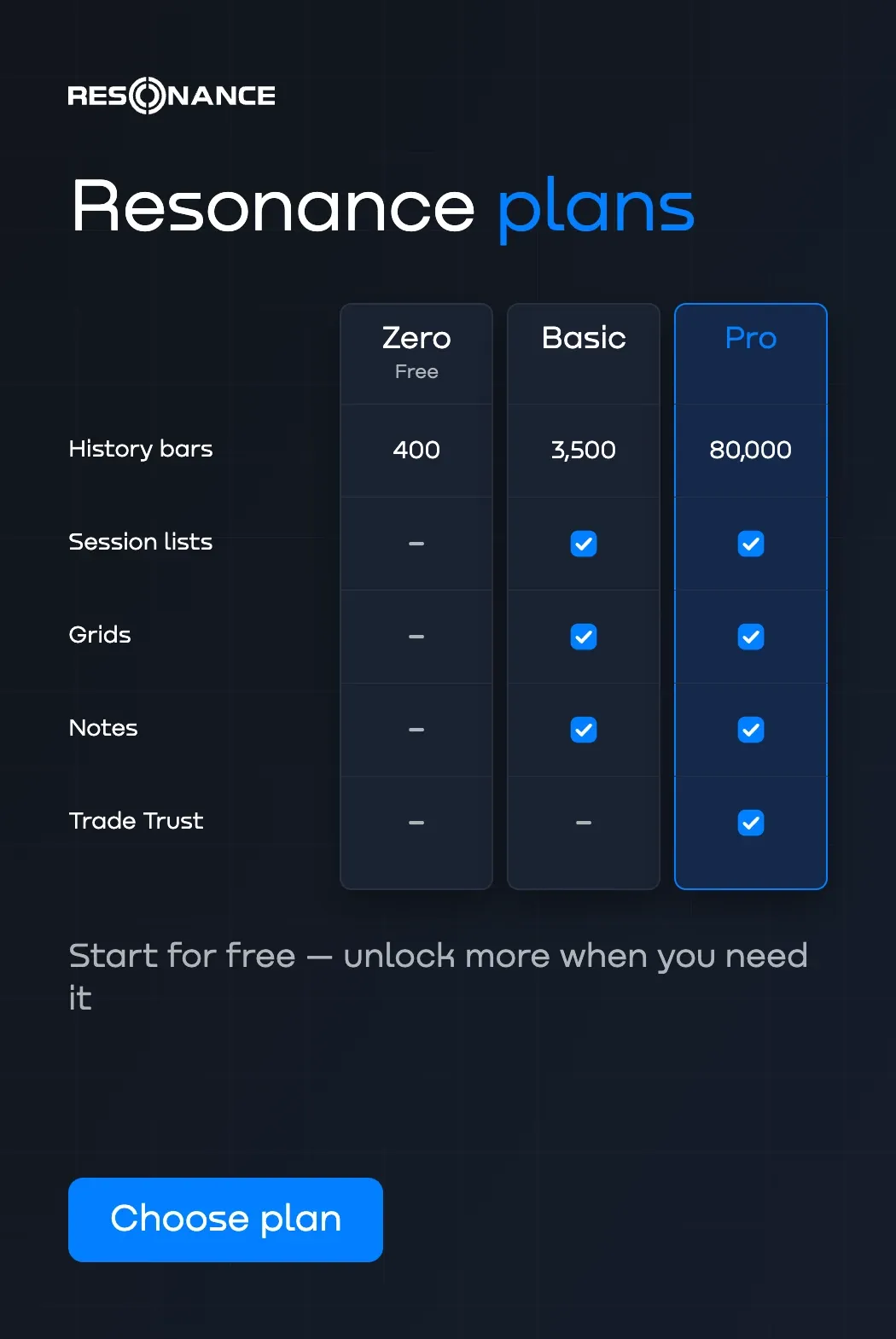
Promo code TOPBLOG gives you 10% off any Resonance plan.
Recommended articles