CFTC allows Bitcoin and Ether in exchange reserves
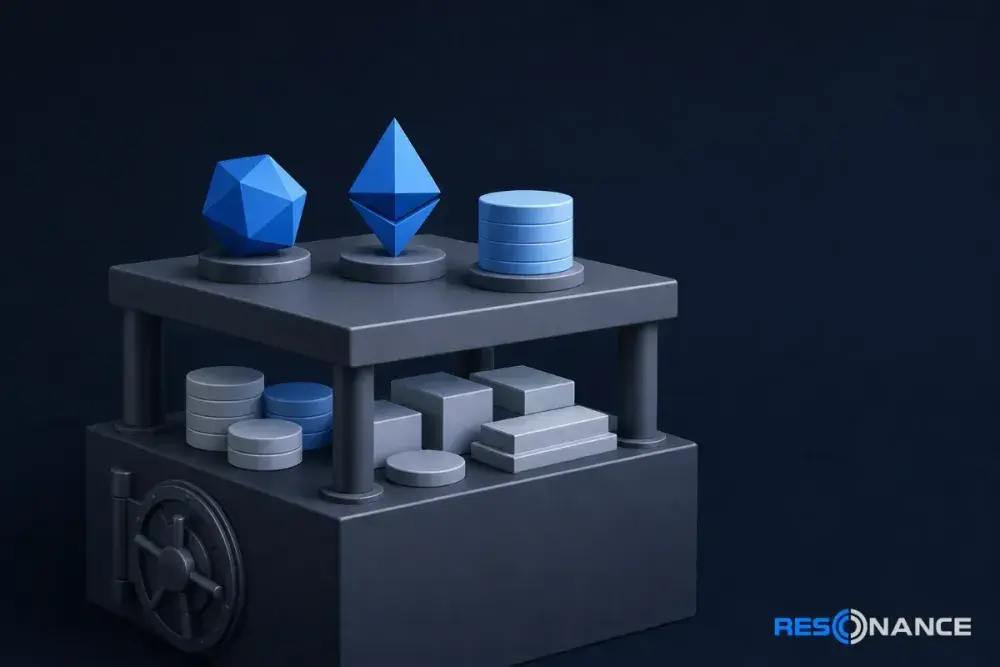
US derivatives venues and clearinghouses can count Bitcoin, Ether and qualifying payment stablecoins toward some reserves. Minimum haircuts are 20% for Bitcoin and Ether and 2% for payment stablecoins.
Table of contents










New staff guidance from the Commodity Futures Trading Commission (CFTC) allows certain US derivatives venues and clearinghouses to count Bitcoin, Ether and qualifying payment stablecoins toward reserves for operating expenses and certain business losses. The minimum haircut is 20% for BTC and ETH and 2% for qualifying payment stablecoins.
How crypto counts toward reserves
Regulated derivatives exchanges, swap execution facilities and clearinghouses must maintain financial resources equal to at least 12 months of operating expenses. Previously, only cash and traditional financial assets counted. The guidance lets firms meet part of the requirement with crypto at a discount to market value.
Assets that are not readily marketable and do not qualify as payment stablecoins generally face a 100% haircut, so they add nothing to eligible reserves. Firms must also account for wrong-way risk: their crypto holdings could lose value at the same time their businesses incur losses.
Crypto does not count toward the liquidity minimum
Swap execution facilities must hold at least three months of operating costs in unencumbered, liquid financial assets. The minimum is six months for designated contract markets and derivatives clearing organizations. Neither BTC and ETH nor qualifying payment stablecoins count toward those floors. Crypto assets do not qualify as cash under generally accepted accounting principles (GAAP) or as highly liquid securities under the applicable rules.
The guidance does not address the resources clearinghouses must maintain to cover defaults.
Analysis for traders
Strengths. Derivatives venues and clearinghouses can use BTC and ETH they already hold to cover part of their reserve needs, rather than relying solely on traditional assets.
Weaknesses. Even with a 2% haircut, payment stablecoins cannot replace the liquid assets needed to cover three or six months of expenses. The bid-ask spread helps assess trading liquidity, which is separate from eligibility under regulatory liquidity rules.
Opportunities. If venues change their reserve mix, qualifying payment stablecoins may be more practical than BTC or ETH because more of their market value counts toward the requirement.
Threats. A drop in BTC and ETH alongside business losses could reduce the recognized value of a venue’s reserves just when it needs them most.
What to watch next
- Whether derivatives venues and clearinghouses disclose how much BTC, ETH and qualifying payment stablecoins they count toward reserves.
- Whether firms apply haircuts above 20% to BTC and ETH to account for the risk of falling crypto values coinciding with business losses.
Source: Crypto Briefing
No need to invent complex schemes or hunt for the “grail”. Use the tools of the Resonance platform.
Sign up on exchanges via our links and get bonuses:
OKX | BingX | KuCoin.
Prop firm — trade with the company’s capital: Kraken.
Promo code TOPBLOG gives you 10% off any Resonance plan.


Recommended articles